Pilgrims on the road and friends along the way send me changes every day, and they go out the same day. The Vía de la Plata app carries all of it offline, and it's still being built — new features arrive routinely.
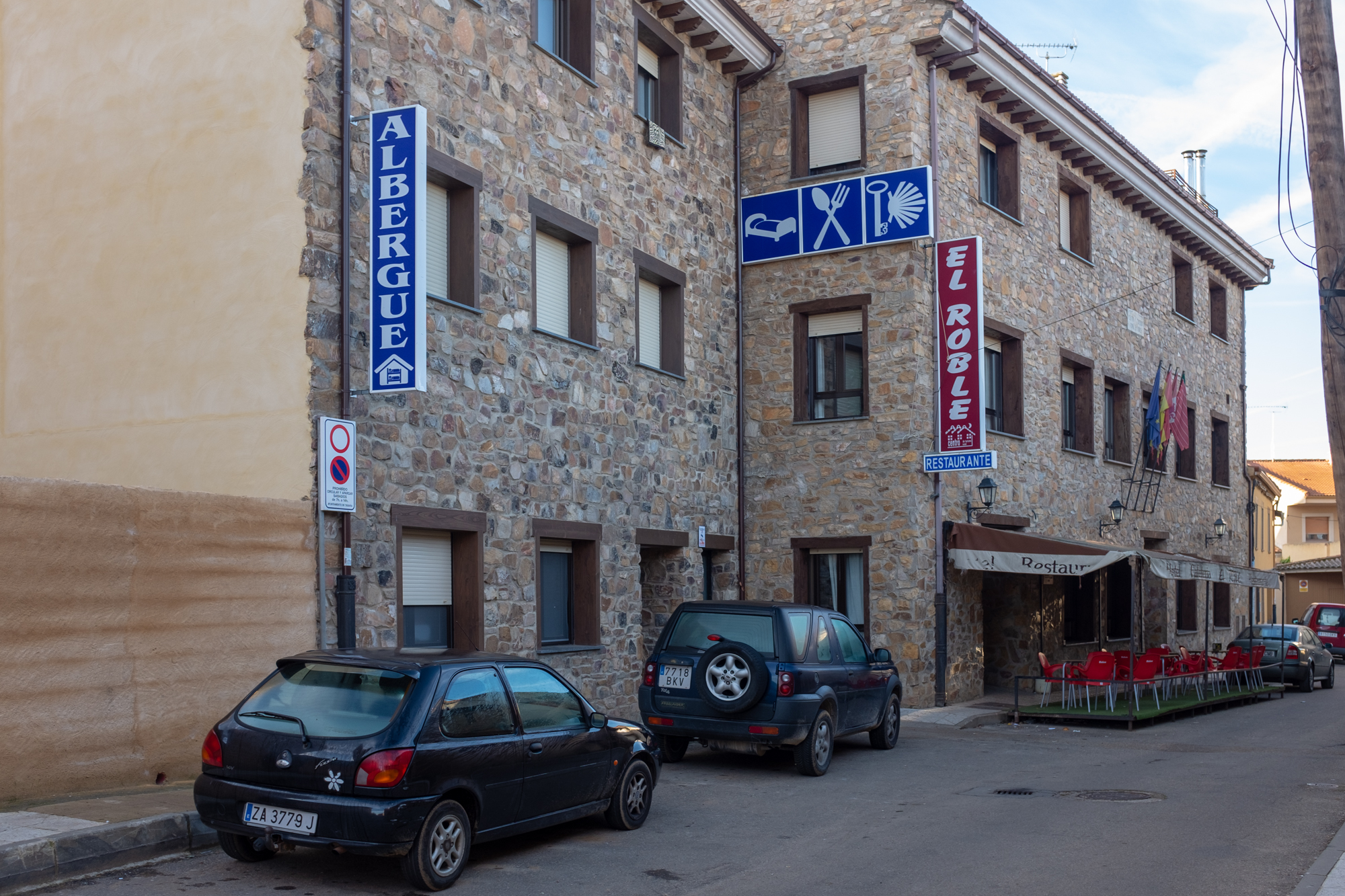
Get the appTabara is a small town with a big history. The municipal albergue here is one of the standouts on the entire Via de la Plata -- well-maintained, welcoming, and a natural place to end a long first day from Granja de Moreruela.
The town's claim to fame is the Monasterio de San Salvador de Tabara, or more precisely, what was produced inside it. In the 10th century, the monastery's scriptorium -- housed in a tall stone tower -- was one of the most important manuscript workshops in medieval Europe. It was here that the monk Magius, and later his disciple Emeterius, created the illuminated Beatus of Tabara, a commentary on the Book of Revelation that is now held in the National Historical Archive in Madrid. The manuscript's most famous page is a miniature of the scriptorium tower itself -- the oldest known image of a scriptorium in all of medieval European art. Emeterius described it in the colophon: 'Oh high and stony tower of Tabara, the first room where Emeterius sat bent over for three months and with all his limbs brandished the pen.'
The tower still stands, attached to the Iglesia de Santa Maria. It's Mozarabic in origin and visible from a distance as you approach town. The rest of the monastery is gone, but the tower is reason enough to stop.
Beyond the albergue, Tabara has bars, a shop, a pharmacy, and a bank. It's the last town with reliable services before Santa Croya de Tera.
The Monasterio de San Salvador de Tabara was one of the great centres of manuscript production in 10th-century Spain. The scriptorium, housed in its distinctive tower, produced the Beatus of Tabara -- an illuminated commentary on the Apocalypse completed by the scribe Emeterius on 29 July 970. Emeterius had taken over the work from Magius (also known as Maius), who died before finishing the manuscript. The illustration of the tower scriptorium within the manuscript is the oldest known depiction of a scriptorium in medieval European art. The manuscript is now held in Spain's National Historical Archive in Madrid. The tower itself is Mozarabic in style and remains attached to the Iglesia de Santa Maria.
If you entered Tabara you have two options to return to the camino. You can return to the camino where you left it, or if you stayed at the municipal albergue you can follow the alternate route from there.
The camino between here and Santa Croya offers two options, both of equal length. The original and more scenic route turns right and passes through Bercianos de Valverde, however with the closure of the bar there, this route has fallen out of favour with pilgrims. It has been replaced with the left route, which heads directly towards Villanueva de las Peras.

8. April 2026 - 21:32
Rainy day and we arrived before the appointed opening time, but this kind and generous permanent hospitalero invited us to register, shower and rest, having up our wet clothes. These places are few and far between. Give generously! We shared a solid meal together with good drink, with breakfast tomorrow. How can he keep doing this?!
28. August 2025 - 18:09
We were there on a Monday and got caught out - it is the only shop in town! Jules and Barry - South Africa
19. May 2025 - 15:42
Well-stocked, modern, good prices, huge!
24. April 2023 - 14:41
How on earth does someone who didn't stay at the municipal have the nerve to complain about it? I'm guessing they did the 25k to get to Tabara, and that was more than their little touragrino legs were used to and they were tired and irritable..
4. May 2021 - 7:05
The gentleman who runs this, has traveled himself the Camino many times. He writes poetry and art on the Camino. This guy is beyond selfless and the ultimate host. He only speaks Spanish and don’t let that be a barrier. If you walk the Camino and view it as a humble path.


Esta entidad ha sido beneficiaria de una ayuda del Programa de incentivos a la movilidad eficiente y sostenible (MOVES III), gestionado por la Xunta de Galicia a través del Instituto Enerxético de Galicia (INEGA) en el marco del Real Decreto 266/2021, y cofinanciada por la Unión Europea — NextGenerationEU, dentro del Plan de Recuperación, Transformación y Resiliencia.